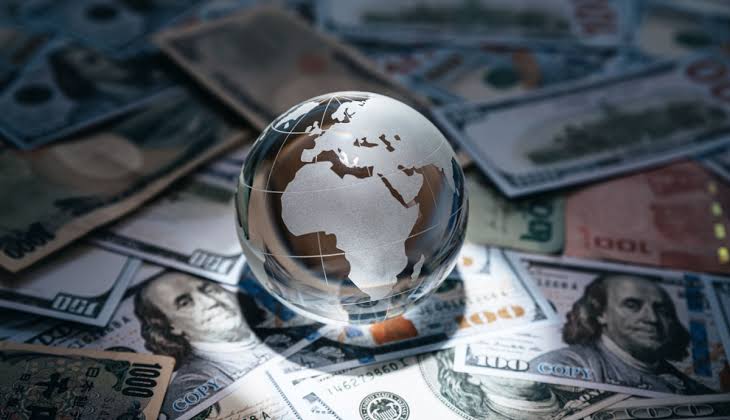

Demystifying the Global Economy

One of the most profound economic lessons weaved into the movie In Time is not about money. It is about fear.
The film presents a society divided into two worlds: New Greenwich, where the wealthy possess virtually unlimited time, and Dayton, where the poor live from one day to the next. In this world, time is currency. Every purchase, every wage, and every transaction is measured in hours, days, and years.
The economic system appears different from our own, but beneath the surface it mirrors many realities of the modern world.
The Economy of Scarcity
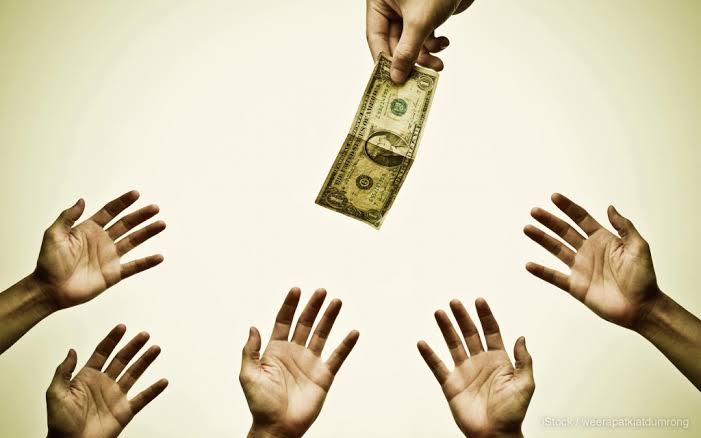
In Dayton, people wake up before sunrise and rush to factory jobs because they are terrified of running out of time. The clock on their arm determines whether they live or die. Missing a bus, losing a job, or facing an unexpected expense can literally cost them their lives.
Fear is the engine that keeps the system running. The workers are not merely motivated by ambition, purpose, or creativity. They are motivated by survival. They need more time to survive so they have to keep working.
This reveals a powerful truth about our current economic system today: scarcity is often the strongest motivator. It is the foundation of modern economics. According to British economist, Lionel Robbins, modern economics centered entirely on scarcity. In his seminal 1932 essay, Robbins defined economics as “the science which studies human behavior as a relationship between ends and SCARCE MEANS which have alternative uses.”
In effect, when people fear losing access to food, shelter, healthcare, employment, or financial security, they become easier to control and easier to predict.
A population driven primarily by fear will often accept conditions it would otherwise challenge.
The Invisible Currency of the Real World
In our world, money functions much like time does in the film.
Most of us spend the majority of our adult lives exchanging our time for money. Every paycheck represents hours that can never be recovered. We often say we are earning money, but in reality we are converting portions of our lives (measured in time) into economic value. As a matter of fact, the world system depends on this exchange.
Most people work because they need basic resources. They need food, housing, transportation, education, and security. Think Maslow’s Hierarchy of Needs. There is nothing inherently wrong with this. Work is both necessary and imperative to unlock human potential.
The deeper question is this: How much of our economic behavior and motivation to work is driven by genuine purpose, and how much is driven by fear? Fear of unemployment. Fear of poverty. Fear of losing status. Fear of not having enough. Fear of the future.
When fear becomes the primary driver, people can spend their entire lives chasing security without ever experiencing freedom.
Jesus spoke to this reality when He said, “Take no thought for your life, what you will eat, or what you will drink; nor your about your body, what you will put on. Is not life more than food and the body more than clothing?” In other words, our primary motivation for work should never be survival or the fear of not having enough resources to take care of basic needs.
Will Salas and the Discovery of Economic Freedom
The protagonist in the movie In Time, Will Salas, discovered this truth about life. Though he begins his journey as a citizen of Dayton, trapped within the same cycle as everyone else. Yet something remarkable happened to him.
Will begins to understand that the system derives much of its power from people’s fear of running out of time. As long as people remain terrified, they continue to behave in predictable ways. They work, consume, compete, and comply because the alternative appears too frightening.
Will’s transformation begins when he becomes willing to think beyond survival. One of the most symbolic moments in his journey is his willingness to give away time. Rather than hoarding every minute for himself, he shares it. This act appears irrational from the perspective of scarcity. If time is life, why would anyone give it away?
But from the perspective of freedom, giving becomes a declaration: “I am no longer ruled by the fear of survival.”
Why Giving Threatens Systems Built on Fear
The global economy is often described in terms of supply and demand, capital flows, productivity, and markets. Yet beneath these mechanisms lies a psychological foundation.
Fear encourages accumulation. Fear says:
- Save more because there will never be enough.
- Hoard resources because others might take them.
- Protect yourself at all costs.
- Measure your worth by what you possess.
Generosity challenges this mindset. When people give, they demonstrate that they believe abundance is possible. Giving weakens the grip of scarcity thinking. This does not mean acting irresponsibly or ignoring practical realities. It means refusing to allow fear to become the master of one’s decisions.
In the film, every act of generosity becomes an act of resistance against a system designed to keep people trapped in survival mode.
Mammon and the Psychology of Control
Ancient wisdom often personified wealth as “mammon”; not simply money, but the power that money can hold over the human heart.
The danger of mammon is not possession itself. The danger is dependency.
When people believe their security, identity, and future depend entirely upon accumulating more resources, they become servants to fear. Mammon thrives where fear thrives. The fear of not enough. The fear of losing what one has. The fear of falling behind. The fear of tomorrow.
The movie illustrates this dynamic vividly. Most citizens of Dayton are not merely poor; they are psychologically conditioned to believe they can never escape scarcity. The system survives because the belief survives.
The Real Escape
…You shall know the truth, and the truth shall set you free…
Many people assume freedom comes from obtaining more money, more status, or more resources. But In Time suggests a deeper possibility.
The first prison is not economic. It is psychological. The first breakthrough occurs when a person ceases to be governed by the fear of lack. This does not eliminate the need for work, responsibility, planning, or financial wisdom. Rather, it changes the posture from which those activities are pursued.
A person driven by fear works for survival. A person driven by purpose works from freedom. The former is constantly reacting. The latter is constantly creating.
In Time is more than a science-fiction thriller. It is a commentary on economics, human psychology, and the forces that shape society. The film suggests that systems of control are sustained not merely by laws or institutions, but by fear especially the fear of running out.
Running out of money. Running out of opportunity. Running out of security. Running out of time.
Will Salas discovers that true freedom begins when fear loses its authority. His willingness to give, rather than merely accumulate, becomes a declaration that scarcity no longer governs his life.
Whether one interprets the story economically, philosophically, or spiritually, the lesson remains powerful: The moment fear of lack stops controlling your decisions is the moment you begin to experience a different kind of wealth; one that no economic system can fully take away.