

From Where Did Fashion Originate?
What inspires fashion trends, and when did they begin?
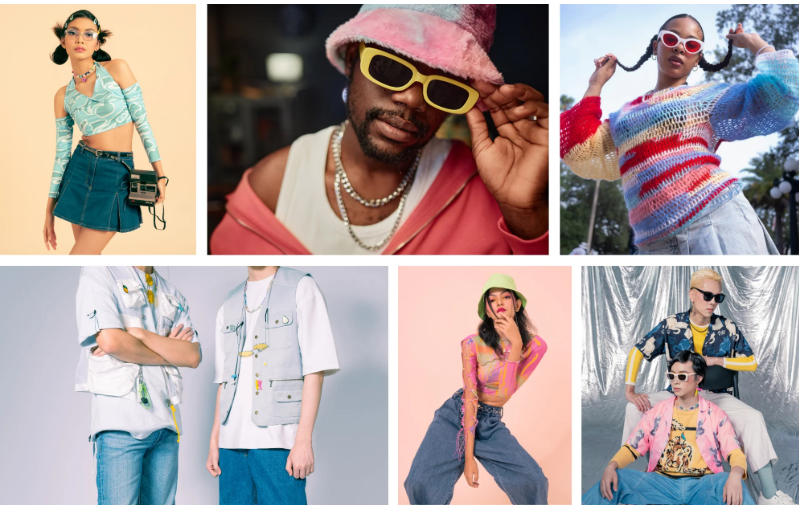
Fashion, in its most profound sense, can be traced back to a cataclysmic event in the Garden of Eden that altered humanity’s spiritual and psychological condition forever. Deceived by an unemployed cherub, humanity’s first parents (Adam & Eve), violated the Creator’s sole command by eating the “Forbidden Fruit”, the consequence of which was colossal: “…for when you eat from it, you will certainly die”.

Physically alive but spiritually dead and soulically dysfunctional…
In the immediate wake of the Fall, humanity’s first instinctual response to a newfound sense of guilt, shame and vulnerability was the creation of clothing. As Genesis 3:7 records,
At that moment their eyes were opened, and they suddenly felt shame at their nakedness. So they sewed fig leaves together to cover themselves.
This, in my opinion, is the origin of the fashion industry and it gave rise to two distinct fashion ideologies that, arguably, continue to influence the fashion world today:
1. The Fig-Leaf Fashion Ideology
Fashion was humanity’s first invention. Adam and Eve attempted to cover themselves with fig leaves, a self-made solution to a deeper problem. It represented man’s effort to conceal nakedness through his own wisdom and design. Yet fig leaves were inadequate; they covered, but they do not cover guilt and shame well.
This insufficiency becomes clear when the LORD God calls out to the man, “Where are you?” Adam replies, “I heard Your voice in the garden, and I was afraid because I was naked; and I hid myself” (Gen. 3:9-10).
Which raises the question: If the fig leaves had already covered his nakedness, why was Adam still terrified, ashamed, and hiding behind the trees?

2. The Tunic-of-Skin Fashion Ideology
This was God’s temporary intervention to man’s new existential dysfunction. God made garments of skin for Adam and Eve and clothed them. Unlike fig leaves, these garments provided proper covering and addressed their nakedness – albeit superficially. They was still the problem of guilt.

Even the enduring debate over modesty and decency within religious circles and in society can be viewed through the lens of these two competing fashion ideologies. One emphasizes freedom of self-expression that often reveals too much; the other emphasizes covering that conceals certain details and protects dignity.
From this perspective, fashion is much more than fabric and style, it communicates a deep-rooted philosophy. Every fashion trend reflects an underlying worldview about how people feel about their body, their sense of shame, and the purpose of clothing itself.
So the next time you encounter a style that deliberately exposes more than it conceals, consider the ideology driving it. One could easily argue that the ancient spirit of the fig leaf is still very much alive today, though it has evolved into something entirely new. We have now effectively transitioned from an era of desperate cover-ups to what feels like the “Age of No Shame,” where the rejection of covering is celebrated as the ultimate form of self-actualization.
But where culture shifts, commerce follows. From a business standpoint, every psychological vulnerability is a market opportunity. There is a massive, highly lucrative frontier for wealth creation as brands capitalize on this “Age of No Shame.”
The global fashion industry, currently valued between $2.5 trillion and $3 trillion, and accounting for over 2% of global GDP continues to expand by selling labels and styles off the rack. It thrives by continuously redefining what it means to be seen.
Yet, for all its economic trappings, fashion remains a superficial solution to a much deeper human struggle: a profound IDENTITY CRISIS. If we are spending trillions of dollars just to “present” ourselves to the world, one has to wonder about the true value of this identity crisis industry.
Enjoy your weekend!