
Mankind’s Greatest Search on Earth and the Origin of Religion
A Race Searching for Home
Every human being is searching for something.
Some search for wealth, believing that financial security will finally bring peace. Others pursue power, relationships, achievement, knowledge, pleasure, or recognition. Yet regardless of what people acquire, a persistent longing remains: a sense that something essential is still missing.
It is as though humanity is suffering from a collective homesickness without remembering exactly where home is.
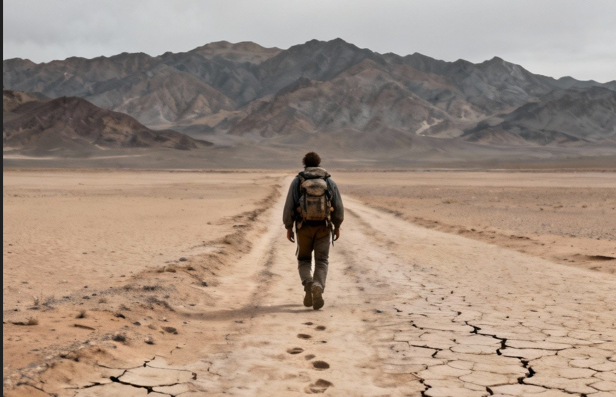
Like a traveler who awakens in a foreign land with no memory of how he arrived there, mankind has spent thousands of years searching for something precious that was lost. The Bible presents this search not merely as a psychological phenomenon but as the consequence of a historical and spiritual separation from humanity’s original homeland: The Kingdom of Heaven.
The First Secession in History
According to Scripture, the story begins at the cradle of humanity. Humanity’s first parents lived under the government, authority, and provision of the Kingdom of Heaven. Eden was more than a beautiful garden; it was Heaven’s embassy on earth—the first outpost of the Kingdom of God within the natural world. From this divine territory, mankind exercised delegated authority over the earth on behalf of its Creator-King.
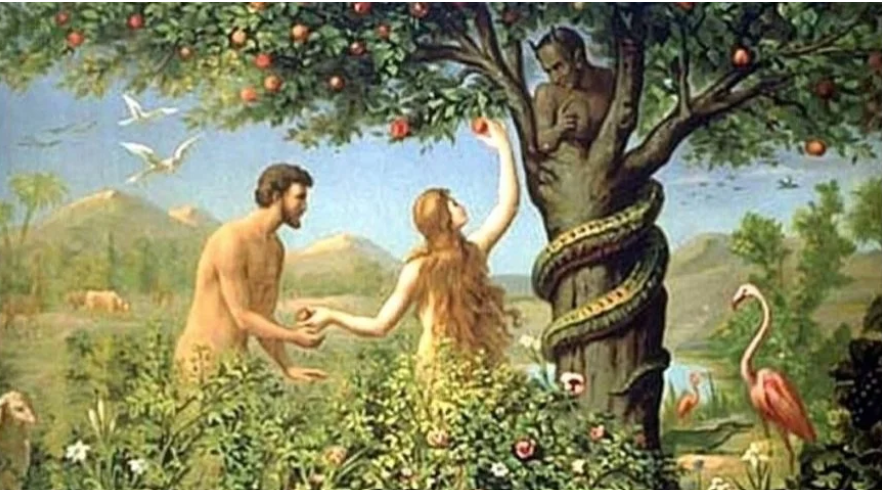
Picture: Humanity’s Progenitors: Adam and Even in the Garden of Eden
However, a rebellion occurred.
Through the deceptive influence of Lucifer, a fallen cherub disguising as a serpent, humanity rejected the government of Heaven and declared independence from the authority of its King. What appeared to be a quest for greater freedom resulted instead in the loss of citizenship, authority, and access to the life of the Kingdom.
The consequences were immediate.
“So the LORD God banished him from the Garden of Eden to work the ground from which he had been taken.” (Genesis 3:23 NIV)
To understand the magnitude of this event, imagine a nation voluntarily separating itself from a powerful kingdom, only to discover afterward that everything sustaining its prosperity was tied to that relationship. Independence brought not liberation but separation from the very source of life itself.

Humanity lost more than a garden. It lost its citizenship. It lost its legal standing within the Kingdom. It lost access to the government, commonwealth and culture of its homeland: HEAVEN.
The Closed Border

Following mankind’s expulsion from Eden, God established a border that prevented humanity from returning on its own terms.
“After He drove the man out, He placed on the east side of the Garden of Eden cherubim and a flaming sword flashing back and forth to guard the way to the tree of life.” (Genesis 3:24 NIV)
This was more than a physical act of exclusion. It was the enactment of an inter-realm border between two realms (countries): Earth and the Kingdom of Heaven.

Just as every sovereign nation controls access to its territory, the Kingdom of God established its own immigration boundary. The cherubim and flaming sword represented Heaven’s border control, guarding access to the Tree of Life and preventing unauthorized re-entry into privileges that humanity had forfeited through rebellion.
To appreciate the significance of this event, consider how modern nations operate. Exiles and non-citizens cannot simply walk into another country and claim citizenship. Passports, visas, permits, applications, and government approvals are required. Entry is determined not by the wishes of the applicant but by the authorization of the sovereign government.
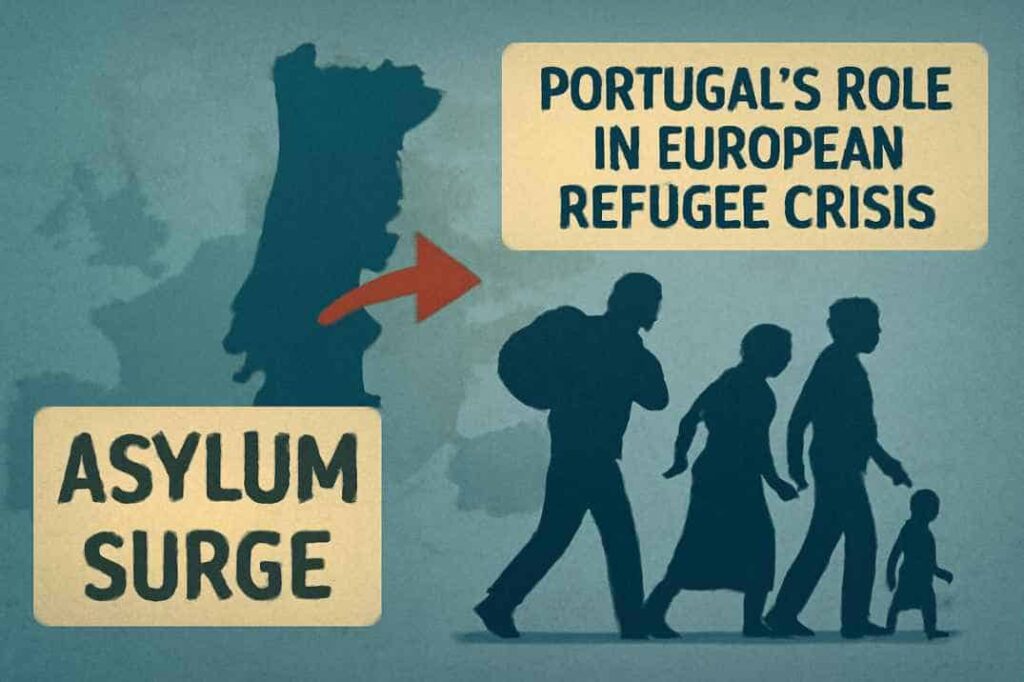
Likewise, mankind could not independently decide to return to the Kingdom of Heaven after declaring independence from its King. Re-entry would have to occur according to the King’s terms, not humanity’s preferences.
The way back to the Tree of Life was no longer open – albeit temporarily. The border was closed. The pathway to citizenship was now under divine administration.
Humanity: A Civilization of Exiles
Adam and Eve were not merely expelled from a garden. They became exiled citizens living outside their native country. They lost both citizenship and residency status. They had to leave the country immediately.
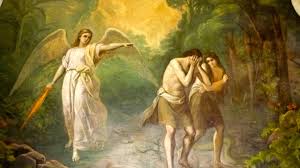
They were former ambassadors of Heaven on earth but were expelled from Heaven’s outpost and were now dwelling in a “foreign territory”, separated from the government, culture, authority, and life of the Kingdom they once represented. Adam and Eve became a stateless couple and their descendants also inherited this condition.
A stateless person is someone who has no nationality and is left without the legal protection, rights, or passport of any state.
Hence, Humanity became a civilization of spiritual expatriates: born outside its original homeland yet carrying within itself memories, instincts, and longings that point back to where it once belonged. This explains the universal restlessness of the human race. The Bible captures this condition of statelessness in a striking language:
“No longer will the ground yield good crops for you, no matter how hard you work! From now on you will be a homeless wanderer on the earth.” (Genesis 4:12 NIV)
A wanderer is someone who moves continually but never arrives. This perfectly describes mankind’s condition after The Fall.
Civilizations have risen and fallen. Empires have been built and destroyed. Scientific breakthroughs have transformed society. Yet beneath all human progress remains a deep sense of incompleteness. Separated from its homeland, humanity resembles a ship whose compass has been damaged. No matter how advanced the vessel becomes, it cannot reach its intended destination because it has lost its true bearing.
People climb mountains of success only to discover that the view from the summit does not satisfy the hunger within. Celebrities attain global fame yet battle emptiness. Wealthy individuals accumulate fortunes but continue searching for meaning.
The problem is not merely that humanity lacks things. Humanity has lost its connection to home.
The Beginning of Religion
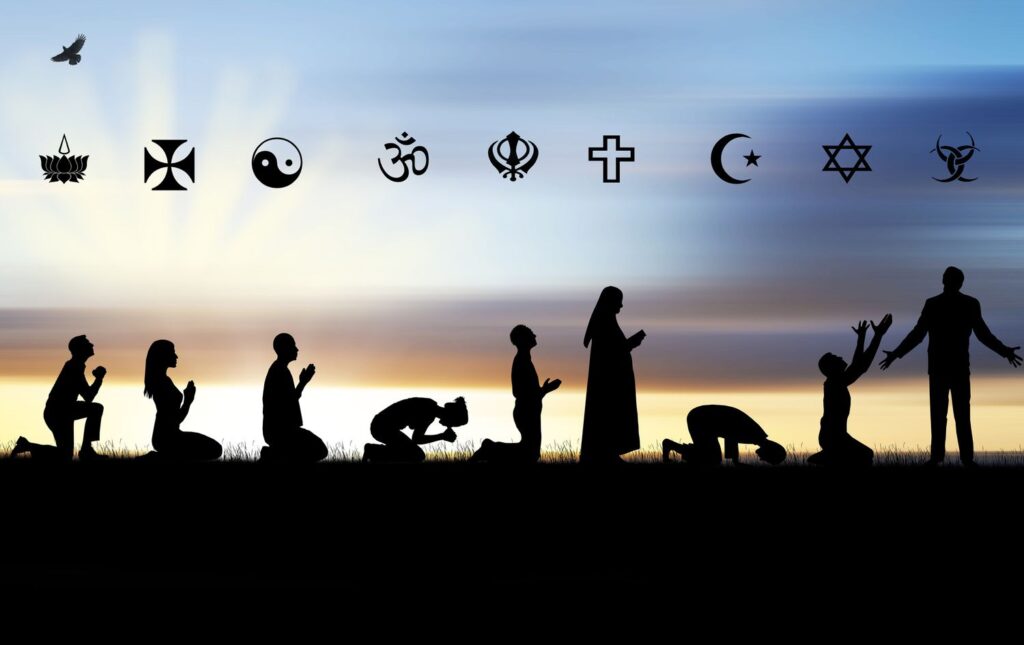
As generations passed, mankind’s longing for home intensified. The Bible records a significant turning point:
“Seth also had a son, and he named him Enosh. At that time people began to call on the name of the LORD.” (Genesis 4:26 NIV)
For the first time, humanity consciously began reaching upward again, seeking contact with the King from whom it had become separated. This marked the beginning of mankind’s religious quest.
The word religion is commonly linked to the Latin word religare, meaning “to bind back,” “to reconnect,” or “to tie together again.”
Whether one accepts every detail of that etymology or not, it captures a profound truth: religion represents humanity’s attempt to reconnect with what was lost. Religion is therefore far more than rituals, ceremonies, sacred buildings, moral codes, or traditions.
At its core, religion is humanity’s search for its true homeland: a long journey to find the way back home and reclaim a lost citizenship. It was our defining preoccupation until the King reopened the borders of His Kingdom. In essence, religion is the story of a race that remembers enough to seek, but not enough to find the way back on its own.
Every prayer uttered, every altar built, every pilgrimage undertaken, and every spiritual system developed throughout history reflects this persistent desire to reconnect with the Creator-King. Yet, history proves that humanity is still searching, even after the borders have been reopened.
Ultimately, the question is not whether we are looking for our homeland, but whether the King has provided a way to return. If we lost our citizenship through separation from the Kingdom, the solution cannot merely be our own search for the Creator-King; it must involve the King’s initiative to restore us to Himself.
This is the essence of the Redemptive Story. For those who wish to reclaim their citizenship, it is the end of all searching. For those who do not, the search (and religion itself) must of necessity continue….
Many Roads, One Search
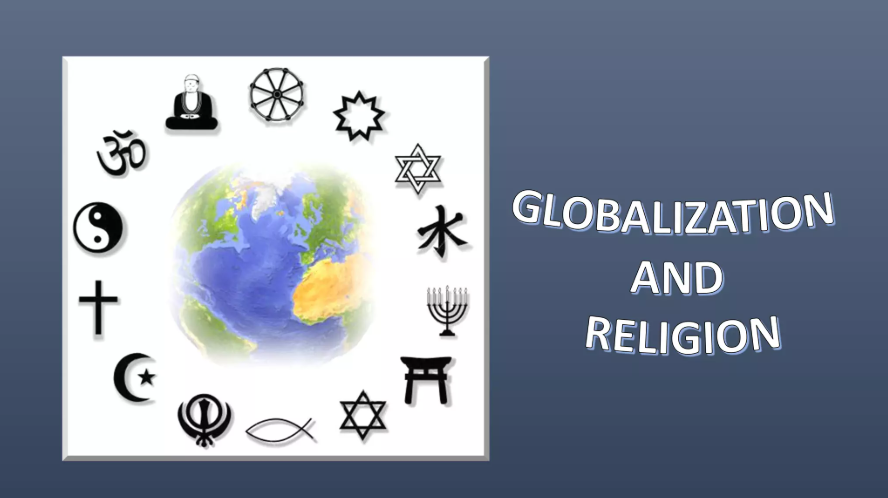
Throughout history, cultures across the world have developed different systems of worship, philosophies, rituals, and spiritual practices. Some sought God through sacrifices. Others pursued enlightenment through meditation. Some attempted to reach the divine through moral discipline, sacred laws, pilgrimages, ceremonies, mystical experiences, or philosophical systems.
Though their methods differed, the underlying motivation was often the same: humanity’s desire to reconnect with its source. In this sense, the world’s religions can be viewed as various expressions of mankind’s search for its lost homeland.
The details differ. The longing remains the same. It is the cry of exiles seeking their native country. It is the yearning of children separated from their Father. It is the search of citizens who remember, however faintly, that they once belonged somewhere greater.
Eternity’s Echo in the Human Heart
Why does this longing exist in every culture and generation?
Scripture provides an answer:
“Yet God has made everything beautiful for its own time. He has planted eternity in the human heart…” (Ecclesiastes 3:11 NLT)
God has placed within every person a memory-shaped space that only He can fill. Like a fish instinctively drawn to water or a bird naturally inclined toward the sky, humanity carries within itself an awareness that it was created for something beyond the material world.
People attempt to satisfy this longing with possessions, relationships, achievements, entertainment, status, and success, but these are temporary substitutes for an eternal desire. The reason the search never ends is because the object of the search is not a thing.
It is the Kingdom. It is The King!
Meditation: Again, the Kingdom of Heaven is like a merchant IN SEARCH OF FINE PEARLS, WHEN HE DISCOVERED A PEARL OF GREAT VALUE, HE SOLD EVERYTHING HE OWNED AND BOUGHT IT! (Matt. 13:45 – 46)